
Your basement stairs are far more than a functional necessity, they’re the first thing anyone sees when descending into your finished space, and they directly impact your basement’s layout, usable square footage, and code compliance for legal occupancy.
If you’re planning a full basement renovation, adding a legal apartment, or carrying out major structural work, stair placement and design should be addressed early. This guide walks homeowners through key basement stair considerations, including code compliance, materials, and design inspiration that elevates your finished basement beyond purely functional space.
How Do Basement Stairs Affect the Value and Functionality of Your Finished Basement?
Basement stairs directly impact home value, legal compliance, and layout flexibility – non-compliant stairs can block permits, reduce resale value, and limit how your basement can be used.
A finished basement can significantly increase home value but only when the renovation meets modern building and safety standards. GTA real estate and appraisal data show that professionally finished basements recover a large portion of renovation costs, and stair design plays a bigger role than many homeowners realize.
Why Basement Stairs Matter More Than You Think
How Stair Design Impacts Basement Value
| Stair Factor | Impact on Value & Use |
|---|---|
| Code compliance | Required for permits, legalization, and resale |
| Width & headroom | Affects comfort, safety, and perceived quality |
| Lighting | Makes basements feel larger and more inviting |
| Placement | Determines layout flexibility and room locations |
| Design choices | Influences tenant appeal and maintenance costs |
Get a complete quote for your basement transformation stairs, permits, and finishing included.
What Should You Consider When Building New Basement Stairs from Scratch?
New basement stairs must meet Ontario Building Code requirements, including minimum 860mm width, maximum 200 mm rise, minimum 255 mm run, and 1,950mm headroom which are verified during inspection and non-negotiable for permits.
Building new basement stairs offers flexibility but requires early planning.
Code First Always
| Requirement | Ontario Building Code |
|---|---|
| Minimum stair width | 860mm (33.9 inches) clear |
| Maximum rise (riser height) | 200mm (7.87 inches) |
| Minimum run (tread depth) | 255mm (10 inches) |
| Minimum headroom | 1,950mm (6 feet 5 inches) |
| Handrail height | 865mm-965mm (34-38 inches) |
| Maximum variation between risers | 6mm (0.24 inches) |
These are non-negotiable and verified during inspection.
2026 UPDATE: Many GTA municipalities now require detailed stair headroom drawings as part of permit submissions.
Layout & Cost Considerations
Straight stairs typically require around 3 metres of linear space. L-shaped and U-shaped designs reduce linear run but increase framing complexity. Stair costs vary widely based on materials and configuration, with custom or steel designs carrying the highest premiums. Standalone stair replacements often cost more than stairs built as part of a full renovation.
Can You Rebuild or Reconfigure Basement Stairs During Underpinning?
Underpinning is the ideal time to relocate or reconfigure basement stairs because the floor is already being lowered, the structure is open, and you can correct decades-old layout problems in one project.
For Toronto homeowners undertaking underpinning projects, the question isn’t whether you can reconfigure your stairs, it’s whether you should miss this once-in-a-renovation-lifetime opportunity. Underpinning involves lowering your basement floor to increase ceiling height, which means your existing stairs no longer reach the new floor level. Since you’re disrupting the stairs and have the basement completely opened up, this is the ideal time to relocate the stair opening, change configuration (straight to L-shaped or vice versa), or add a separate entrance for a legal basement apartment.
When rebuilding stairs during underpinning, structural integrity is paramount. Your new stairs must be properly supported, stair stringers need solid bearing points at both top and bottom. The new concrete floor provides excellent bearing at the bottom, while connections to the main floor framing must be engineered properly. If you’re relocating the stair opening, a structural engineer should review the changes to ensure main floor integrity.
Key Takeaways: Underpinning is the best time to relocate or redesign stairs because the structure is already opened up. Rebuilding stairs without rethinking placement can lock you into a weak layout for decades. Engineer support and connections correctly this is structural work, not cosmetic work.
Considering underpinning in Toronto? Our team handles everything from structural engineering to final stair installation. Contact RenoDuck today to schedule your free consultation
What Are the Best Basement Staircase Ideas for a Full Renovation?
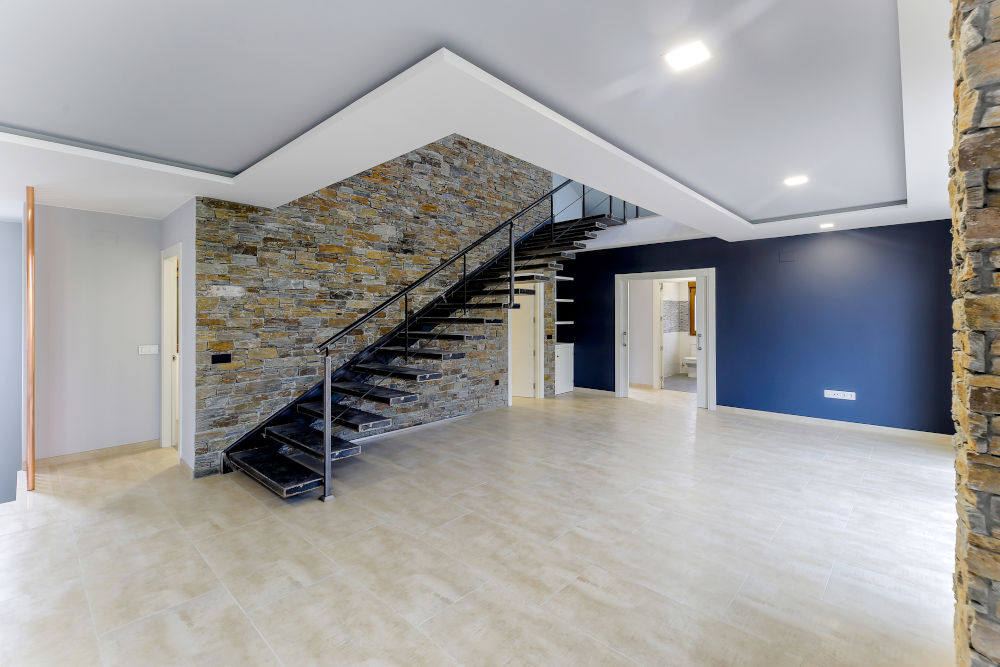
The best basement staircase designs balance configuration (straight, L-shaped, or U-shaped), riser style (open or closed), material choices, and integrated lighting to match your space, budget, and intended use.
The best basement staircase ideas balance aesthetics, functionality, safety, and budget in ways that suit your specific project.
Straight Stairs vs. L-Shaped vs. U-Shaped
Straight stairs are the simplest and most economical to build. They’re easy to navigate, work well for moving furniture, and have a classic appearance. However, they require significant linear floor space (typically 3+ metres) and can feel stark in open-concept designs.
L-shaped stairs turn 90 degrees at a landing platform. They use corner space efficiently, break up the visual length of the descent, and provide a natural resting point. The landing can also serve as a design feature, a spot for a plant, artwork, or window.
U-shaped stairs turn 180 degrees, with two parallel flights connected by a landing. They’re the most compact option for high rises (like deep underpinned basements) and create an enclosed, architectural feel. However, they’re the most expensive configuration and can feel cramped if not designed with adequate width.
| Configuration | Floor Space Needed | Best For | Approximate Cost Premium |
|---|---|---|---|
| Straight | 3.0m+ linear | Simple layouts, furniture moving | Baseline |
| L-shaped | 2.4m × 2.4m corner | Corner placement, visual interest | 14.75 |
| U-shaped | 2.0m × 3.0m | Deep basements, compact footprint | 24.6 |
Open Risers vs. Closed Risers
Open basement stairs (floating stairs) have no vertical board between treads, allowing light and sightlines to pass through. They create a modern, airy aesthetic that can make basements feel larger. Ontario Building Code permits open risers but limits the opening to less than 100 mm to prevent children from getting stuck.
For rental properties, some tenants with young children or pets prefer closed risers for safety. Open risers also allow dust and debris to fall through, which can be problematic if the space below is finished.
Closed risers provide a traditional look, completely enclose the stair structure, and maximize usable space beneath the stairs. They’re generally less expensive and appeal to a broader range of tastes.
Design Styles: Modern, Traditional, and Transitional
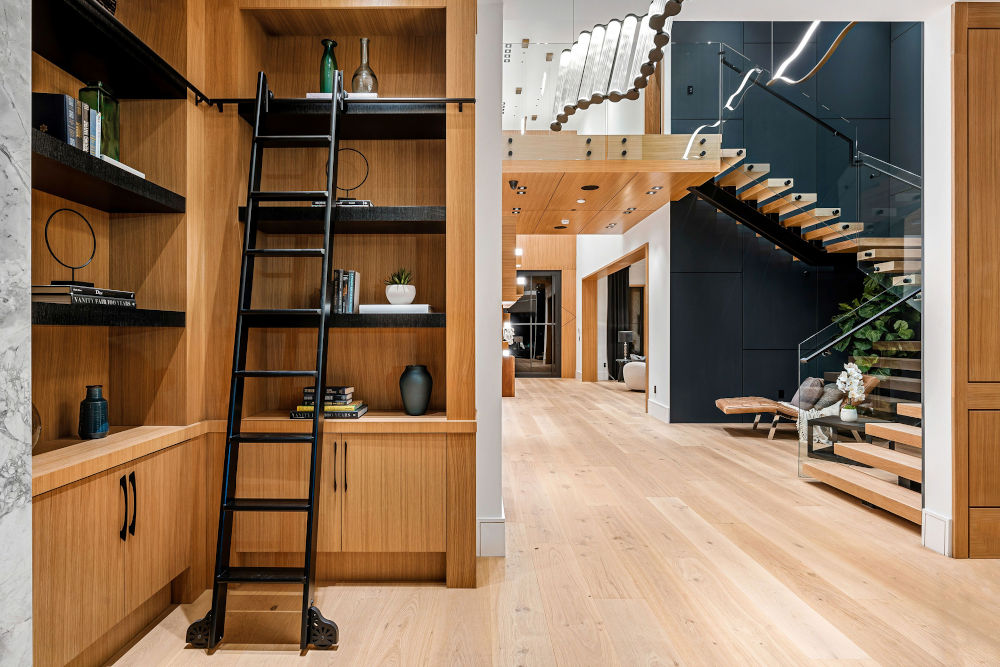
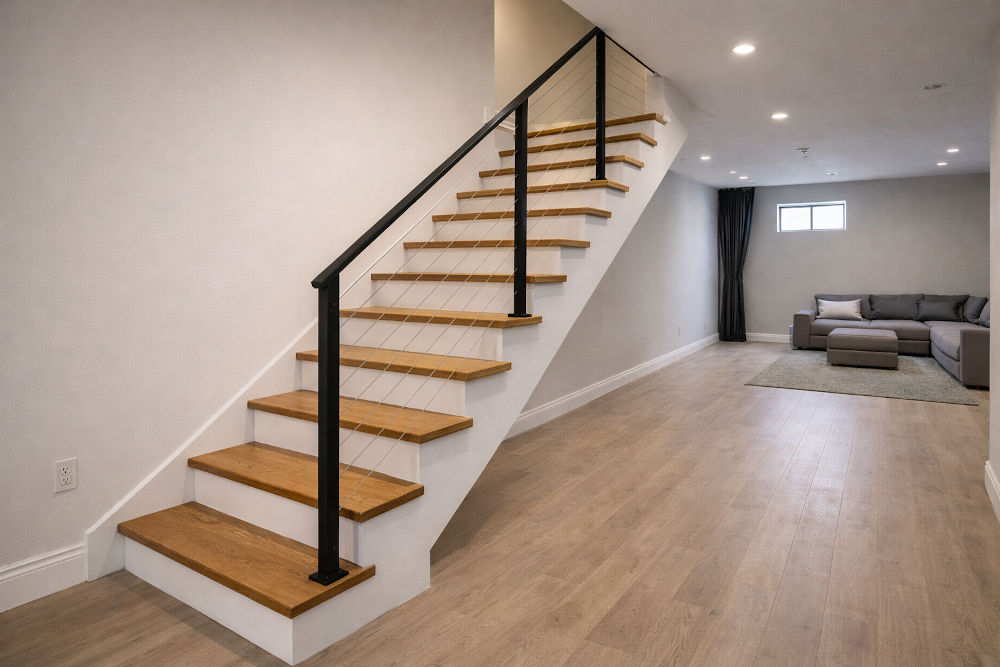
Modern basement stairs emphasize clean lines, minimal ornamentation, and often combine materials like wood treads with metal or glass railings. Popular finishes include white oak, matte black metal, and clear glass panels.
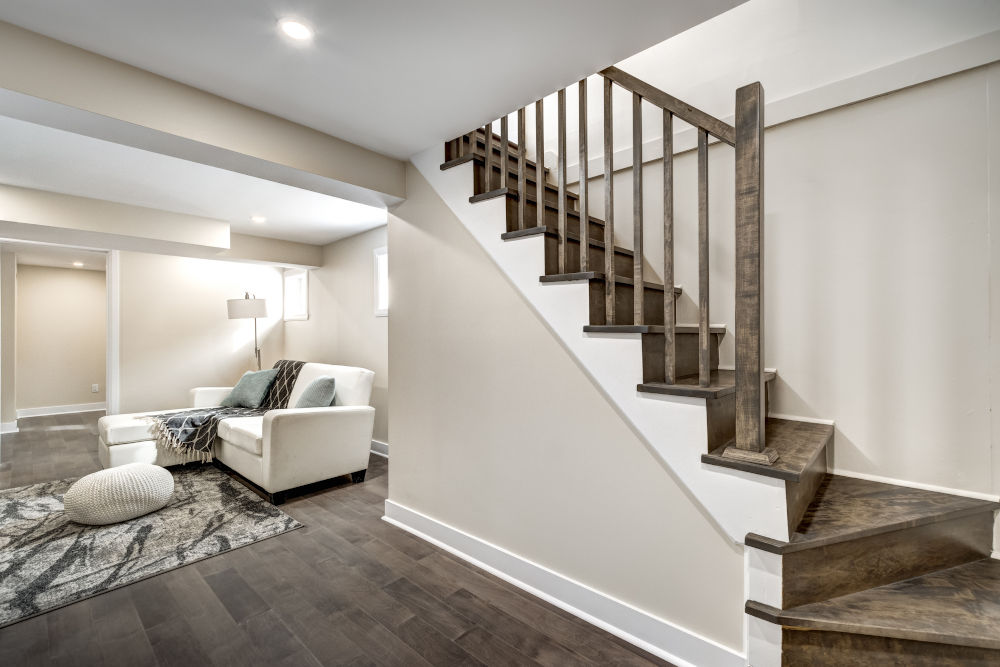
Traditional basement stairs feature closed risers, wood railings with turned balusters, and decorative newel posts. Oak, maple, and cherry are popular choices.
Transitional designs blend elements from both — wood treads with simple square balusters and a sleek handrail profile. This versatile approach works in most homes and tends to age well.
Lighting Integration
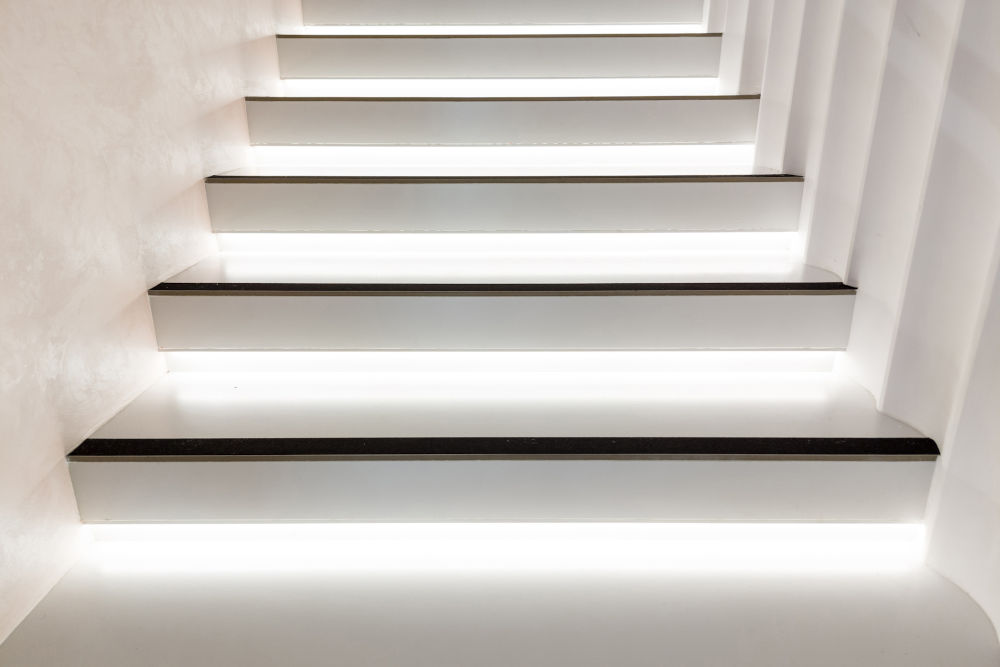
Step lighting (small lights recessed into the wall or risers) provides subtle illumination that’s both functional and dramatic. LED step lights are energy-efficient and long-lasting.
Overhead lighting ensures adequate general illumination. Consider a pendant or chandelier as a design feature, or recessed lighting for a cleaner look.
Natural light transforms basement stairs. If possible, position your stairs near a window or consider adding a skylight above the stair opening.
2026 TREND NOTE: Smart lighting integration is increasingly popular — motion-activated step lights, colour-temperature adjustment throughout the day, and whole-home automation integration are trending features in GTA renovations.
How Should You Design the Space Under Your Stairs?
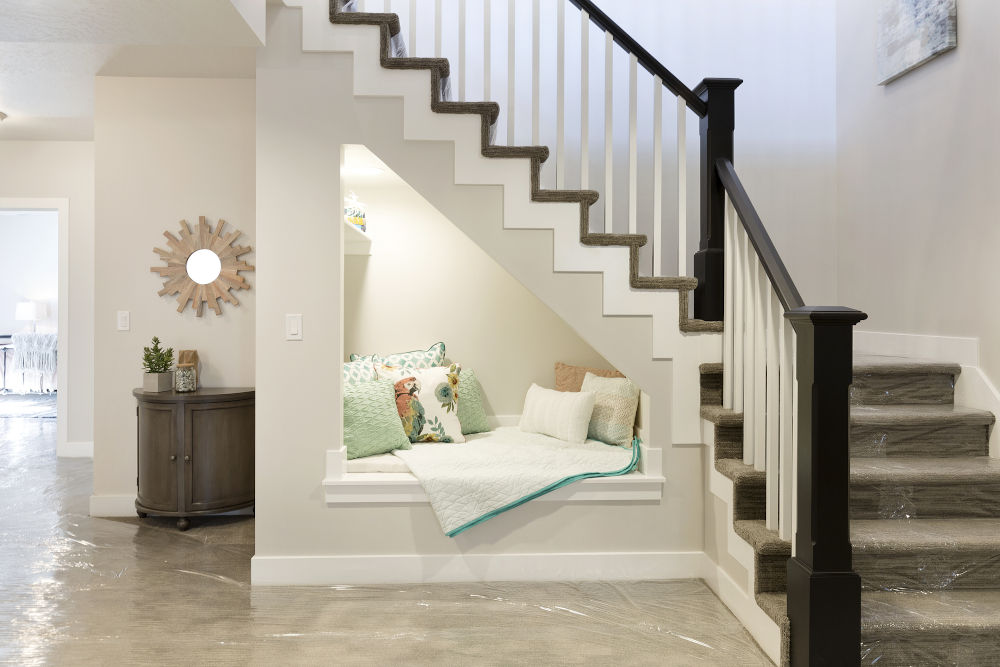
Under-stair space can add significant functionality to your basement options include built-in storage closets, pull-out drawers, home office nooks, pet areas, or even a powder room in suitable layouts.
The space under basement stairs is often underused, but smart design can significantly improve basement functionality.
Storage Solutions
Built-in closets under L- or U-shaped stairs work well for seasonal items, sports gear, or supplies. Lighting and adjustable shelving improve usability.
Pull-out drawers integrated into closed-riser stairs maximize space efficiency.
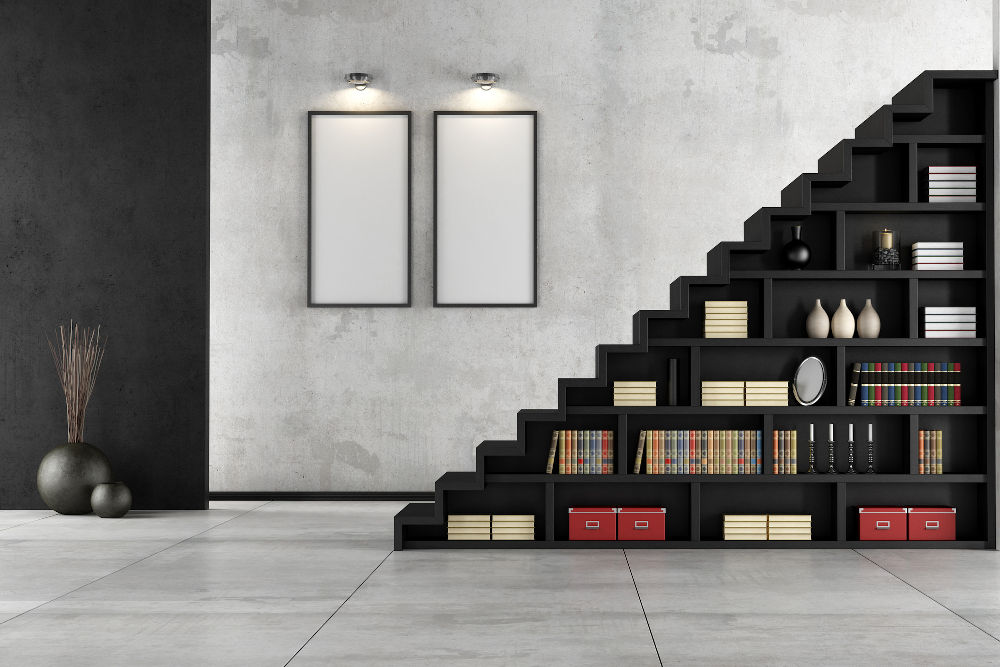
Open shelving offers accessible storage and visual appeal—best for books, décor, or uniform storage bins.
Functional Uses Beyond Storage
Home office nook: A compact desk, lighting, and an outlet can create a functional workspace if headroom allows.
Pet area: Ideal for pet beds and feeding stations with proper ventilation and easy-clean finishes.
Reading corner: Seating, lighting, and a small shelf can turn the space into a quiet retreat.
Powder room: In suitable layouts, a small toilet and sink can fit under the stairs, adding value to legal basement apartments.
Legal Basement Apartment Considerations
In separate dwelling units, under-stair spaces must meet stricter requirements. Fire separation may be required if the stair serves as an escape route, and construction must not obstruct egress paths. Built-in storage is especially attractive to tenants and can support higher rental value.
Under-Stair Design: Key Takeaways
Under-stair planning is a “hidden ROI” move, especially in smaller GTA basements. Closed risers make storage easier and cleaner. In legal suites, avoid anything that complicates fire separation or exit routes.
Basement Stair Transformations: What Makes the Biggest Impact?
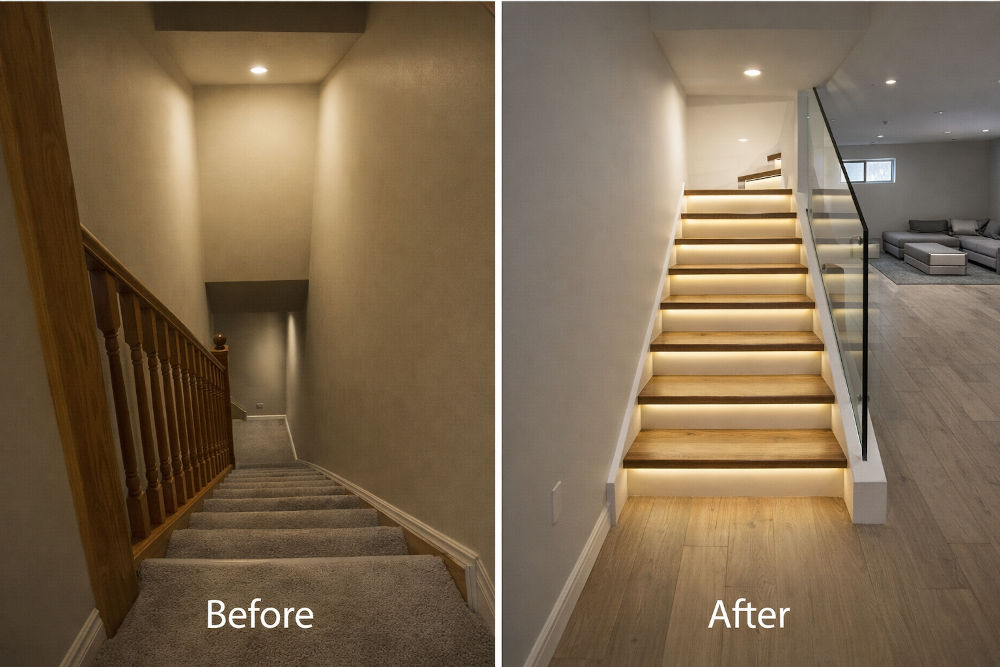
The highest-impact stair upgrades are opening enclosed stairwells ($3,000 – $8,000), replacing dated railings ($2,000 – $5,000), and adding step lighting ($500 – $2,000) ; these changes transform appearance without full stair replacement.
Not all stair upgrades deliver the same return. The following changes have the biggest impact in GTA basement renovations:
High-Impact Changes
Opening up closed stairs: Converting an enclosed stairwell to an open design with a railing dramatically changes the feel. Light flows differently, the space feels larger, and the transition between floors becomes a feature rather than a tunnel. ($3,000–$8,000 depending on structural requirements)
Upgrading railings: The railing is the most visible element. Replacing dated turned balusters with modern cable rails, glass panels, or simple square metal balusters transforms the entire appearance. ($2,000–$5,000)
Adding stair lighting: Step lights, under-tread lighting, or upgraded stairwell fixtures add drama and improve safety. ($500–$2,000)
Changing tread material: Swapping carpeted stairs for hardwood or replacing worn treads dramatically improves appearance. ($1,500 for refinishing to $4,000+ for new hardwood)
Moderate-Impact Changes
New paint and stain: Fresh paint on risers, stringers, and surrounding walls brightens tired stairs. ($300–$800)
Decorative newel post: An upgraded newel post draws the eye and anchors the stair design.
Tread caps and nosing: New tread caps and fresh nosing profiles update appearance without full replacement.
Changes That Make Less Difference Than Expected
Repainting without other changes: Paint alone won’t fix cramped, dark, or awkward stairs.
Elaborate finish work on enclosed stairs: If stairs descend through an enclosed shaft, expensive finishes may not deliver value — the eye passes through too quickly.
Mixing too many materials: A cohesive design with one or two materials typically looks more intentional.
Modern vs. Traditional Considerations
Modern designs photograph beautifully and feel current but can date quickly and appeal to a narrower buyer pool. Traditional designs age gracefully and appeal to a broader audience. Transitional designs often deliver the best of both worlds, current without being trendy.
Alt text: Basement stair railing transformation before and after
2026 TREND NOTE: The “quiet luxury” trend has reached basement design. Rather than statement staircases with mixed metals and bold glass, the current preference favours high-quality materials, expert craftsmanship, and understated elegance, white oak with matte finishes, simple steel railings with soft curves, and integrated lighting that enhances without overwhelming.
Transformations: Key Takeaways
If the budget is limited, prioritize railings + lighting + openness before expensive materials. The biggest “wow” often comes from making stairs feel brighter and more spacious, not from luxury finishes. Keep materials simple and coordinated.
Best Materials for Basement Stairs in GTA
In GTA, ON, basements, engineered wood, concrete, and properly sealed hardwood perform best due to their moisture resistance and dimensional stability. Solid softwood and natural fibre materials are poor choices in humid, below-grade environments.
Material selection for basement stairs must account for local climate, especially the moisture and temperature fluctuations common in below-grade spaces.
Wood Options
Wood remains the most popular choice for basement stairs in GTA homes, offering warmth, durability, and design flexibility.
Hardwood (oak, maple, hickory, cherry): Solid hardwood treads are durable and can be refinished multiple times. Oak offers strong wear resistance at a moderate cost. Maple provides a harder, contemporary look. Hickory features bold grain variation. Cherry trees develop a deeper colour over time.
Softwood (pine, fir): More affordable and commonly used in utility or budget-focused projects. Softer and more prone to dents, so typically painted. For finished basements with regular traffic, hardwood is usually the better long-term choice.
Engineered wood: Offers the look of solid wood with greater dimensional stability, making it better suited to fluctuating basement humidity. Quality products can usually be refinished once or twice.
| Wood Type | Durability | Moisture Resistance | Cost (per tread) | Best For |
|---|---|---|---|---|
| Red Oak | Excellent | Moderate | $80-$150 | Traditional designs, high traffic |
| White Oak | Excellent | Good | $100-$180 | Modern designs, moisture-prone areas |
| Maple | Excellent | Moderate | $90-$160 | Contemporary looks, painted stairs |
| Engineered Oak | Very Good | Excellent | $70-$130 | Basements with humidity concerns |
| Pine | Good | Poor | $30-$60 | Budget projects, painted stairs |
Concrete Stairs
Concrete is inherently durable and moisture-resistant, making it excellent for basement environments most commonly used in underpinning projects where it integrates directly with the new floor.
Poured concrete is permanent, unaffected by moisture, and requires minimal maintenance. It can be stained, polished, painted, or covered with other materials.
Precast concrete treads can be installed on steel or concrete stringers, offering durability with easier installation.
Metal and Hybrid Approaches
Steel stringers with wood treads combine strong structural support with the warmth of wood, delivering a clean, modern appearance.
Aluminum is lightweight and corrosion-resistant, well-suited for exterior basement staircases (separate entrances) but less common indoors.
Moisture Considerations in GTA Basements
Humidity is one of the biggest threats to basement building materials across the Greater Toronto Area. Homes in Toronto neighbourhoods such as Etobicoke, North York, and Scarborough, as well as surrounding cities including Mississauga, Vaughan, Markham, Richmond Hill, Thornhill, Oakville, Aurora, King City, and Newmarket, are especially vulnerable due to high groundwater tables near Lake Ontario, clay-heavy soils, older foundation systems in many pre-1990 homes, and freeze–thaw cycles that force moisture through concrete.
Professional takeaway: In Toronto-area basements, stair materials should prioritize moisture tolerance and dimensional stability. Engineered wood, concrete, vinyl, and properly sealed hardwood consistently outperform untreated wood or natural fibre materials.
Long-Term Performance Guidelines
Best Railing Ideas for Basement Staircases
Basement stair railings must meet Ontario Building Code requirements (865 mm – 965 mm height, maximum 100 mm baluster spacing) while serving as one of the most visible design elements; wood offers warmth at lower cost, metal provides durability with minimal maintenance, and glass maximizes light and sight lines.
Your railing is both a critical safety feature and a major design element.
Wood Railings
Wood railings remain popular for their warmth, traditional appeal, and relatively low cost.
Traditional profiles: turned balusters, detailed newel posts, and profiled handrails suit traditional and transitional designs. Oak is standard, though painted railings in white or soft colours are equally common.
Modern profiles: clean square balusters, simple rectangular handrails, and minimal newel posts create a contemporary look while keeping the warmth of wood.
Pros: Cost-effective, warm appearance, easy to refinish, suits many styles
Cons: Requires maintenance, can feel dated with ornate profiles
Metal Railings
Metal railings offer durability and design versatility with minimal maintenance.
Steel and iron: Painted or powder-coated steel balusters create clean vertical lines. Black is most popular, though bronze, nickel, and custom colours are available.
Cable railings: Stainless steel cables running horizontally create a minimal, modern aesthetic that maximizes sight lines and light passage.
Pros: Durable, minimal maintenance, modern aesthetic, good sight lines
Cons: Higher cost, can feel cold, requires precision installation
Glass Railings
Glass panels create the most open, light-filled appearance.
Framed glass is less expensive and easier to install. The frame provides structure and can become a design element.
Frameless glass creates a floating, ultra-modern appearance, the most expensive railing option.
Pros: Maximizes light and sight lines, dramatic appearance, easy to clean
Cons: Highest cost, shows fingerprints, may not suit all styles
Space-Saving Railing Tips
Minimal profiles: Thin handrails and slender balusters take up less visual and physical space.
Single-side railings: When code allows, a railing on only one side frees the other for better flow.
Wall-mounted handrails: Where stairs run along a wall, a wall-mounted handrail takes no space from stair width.
Matching Railings to Your Basement Style
Railings: Key Takeaways
Railings are one of the highest-impact visual upgrades you can make. For legal suites, prioritize durability and low maintenance over showpiece designs. Keep profiles clean and consistent with the home’s overall style.
What Are the Best Basement Stair Covering Ideas?
Stair coverings like synthetic carpet runners, luxury vinyl treads, or hardwood tread caps can upgrade basement stairs without full replacement, choosing materials based on moisture resistance rather than appearance alone, as below-grade conditions demand durable, humidity-tolerant products.
Stair coverings can upgrade basement stairs without full replacement, improving comfort, safety, and appearance.
Carpet Runners and Stair Treads
Full carpet covers treads and risers completely, offering maximum comfort and noise reduction works best in traditional designs.
Carpet runners place carpet down the centre, leaving wood exposed on both sides. They balance comfort with aesthetics and are easier to replace.
Individual tread covers improve traction while preserving more of the wood’s appearance.
Basement tip: Choose synthetic carpets (nylon or polypropylene) with moisture-resistant backing. Low-pile options dry faster than natural fibres.
Vinyl and Rubber Coverings
Luxury vinyl treads are durable, water-resistant, and available in realistic wood looks — easy to clean and maintain.
Rubber treads offer excellent slip resistance, common in utility spaces, though decorative options exist.
Best for: Moisture-prone basements; easy maintenance
Wood Overlays and Laminate
Hardwood tread caps fit over existing treads, delivering significant visual upgrade at lower cost than full replacement ideal when stairs are structurally sound.
Laminate overlays provide a wood look at a lower price point but can’t be refinished and may wear faster.
Slip Resistance and Safety
Non-slip additives can be applied to painted or finished surfaces without altering appearance. Stair nosing enhances grip at the tread edge, especially important for hard surfaces.
Lighting improves visibility of tread edges and surface texture.
Material Selection Summary
Basement stair coverings should be selected based on long-term moisture performance, not just appearance. Synthetic carpet with moisture-resistant backing, luxury vinyl, rubber, or properly sealed hardwood offer the best durability in below-grade conditions. Natural fibre carpets and unfinished wood absorb moisture and can lead to odours, warping, or premature failure.
Coverings: Key Takeaways
Coverings are a smart “upgrade path” when stairs are structurally fine but visually dated. In basements, moisture resistance matters more than softness or trend. Combine the right covering with lighting and slip resistance for the best result.
Paint and Finishing Ideas for Basement Stairs
Basement stairs require moisture-resistant primers, floor-grade paints or stains rated for high humidity, and protective finishes like polyurethane — standard wall paint will fail in below-grade conditions.
The right paint and finish protect basement stairs from moisture, wear, and long-term use while supporting your desired aesthetic. Because basements are more humid than above-grade spaces, paint and finish choices require extra care.
Primer and Paint for Humid Environments
Moisture is the primary challenge for painted basement stairs, so proper product selection matters.
Primer selection: Use a high-quality primer suited to your stair material. Unpainted wood needs a penetrating wood primer, while previously painted stairs benefit from a bonding primer. In high-humidity basements, a moisture-barrier primer helps reduce water vapour transmission.
Paint selection: Choose paint formulated for high-humidity areas or specifically rated for floors and stairs. These products resist moisture and fungal growth better than standard wall paint. Satin or semi-gloss finishes are most practical — they’re easy to clean without being as slippery as high-gloss.
Popular colour approaches:
Staining vs. Painting Wood Stairs
The choice between staining and painting depends on wood quality, design goals, and maintenance preferences.
Staining enhances natural grain and warmth, making it ideal for quality hardwood. It requires periodic re-coating to maintain protection.
Painting hides grain and imperfections, works well on softwood or lower-grade wood, and allows unlimited colour choices, though touch-ups may be needed over time.
| Factor | Staining | Painting |
|---|---|---|
| Wood grain visibility | Fully visible | Hidden |
| Best wood types | Quality hardwood | Any wood |
| Colour range | Limited to wood tones | Unlimited |
| Maintenance | Re-coat every 3-5 years | Touch-up as needed |
| Hiding imperfections | Poor | Excellent |
| Cost difference | Moderate | Lower |
Protective Finishes
Finishes must protect stairs from both wear and moisture.
Non-Slip Finishes
Painted or stained stairs can be slippery, so traction should be addressed.
Trim and Detail Work
Finishing details significantly affect the final look.
2026 Trend Note: Low-sheen finishes are overtaking high-gloss options. Matte and satin polyurethanes, along with eggshell-to-satin paints, align with the “quiet luxury” aesthetic influencing GTA basement renovations.
RenoDuck Project Spotlight: The Morrison Family Basement Transformation
This Scarborough basement renovation included full underpinning to 8-foot ceilings, a complete stair rebuild with a new L-shaped configuration, and finishing as a legal apartment resulting in $1,800/month rental income.
A complete basement renovation that turned a dark, dated space into a beautiful legal apartment with stairs as a centrepiece.
The Challenge
When the Morrison family contacted RenoDuck, their 1970s Scarborough home had a basement that had never been properly finished. The existing stairs were steep, narrow, and enclosed by dark paneling on both sides. The family wanted to create a legal basement apartment for rental income while also gaining a comfortable family space for when the apartment wasn’t rented.
The biggest obstacles: The basement ceiling height was only 6’6″ (below legal requirements for a dwelling unit), the stairs didn’t meet current code, and the existing entrance didn’t support the separate access required for a legal apartment.
The RenoDuck Solution
RenoDuck designed and executed a complete transformation that included:
The Results
Timeline: 12 weeks from demolition to move-in ready
Investment: $95,000 for complete underpinning and finishing (stairs portion approximately $12,000)
Outcome: The Morrisons now have a legal basement apartment generating $1,800/month in rental income, plus a flexible space that can serve as a guest suite when between tenants.
Client quote: “The stairs were honestly what we cared least about at the start. We just wanted more space. But now they’re one of our favourite features. The open design transformed how the whole basement feels, and guests always comment on how beautiful they are. RenoDuck helped us see possibilities we never would have imagined.”
This project demonstrates how a full-service renovation approach transforms not just individual elements but entire living spaces. From structural underpinning to the finishing details of stair lighting, every component works together to create something greater than the sum of its parts.
How to Choose the Right Basement Stair Ideas for Your GTA Project
Choose basement stairs based on primary use (legal apartment, family space, or multi-purpose), budget ($5,000 – $20,000+ depending on scope), household needs (children, elderly, tenants), and timeline (3 days for upgrades to 6 weeks for underpinning projects).
Questions to Ask Yourself
What’s the primary purpose of your basement?
What’s your budget allocation for stairs?
| Budget | What’s Possible |
|---|---|
| Under $5,000 | Upgrading existing stairs with new railings and refinishing |
| $5,000 – $10,000 | New railings, tread replacement, moderate configuration changes |
| $10,000 – $20,000 | Full stair rebuild with quality materials and custom railings |
| Over $20,000 | Premium materials, complex configurations, designer details |
Who will use these stairs?
What’s your timeline?
Common Mistakes
Underestimating budget: Stairs cost more than most people expect, especially with railings and quality materials. Build in 15 – 20% contingency.
Ignoring code until too late: Code issues discovered during inspection force costly changes. Verify compliance during design, not after construction.
Choosing style over substance: That stunning glass-and-steel floating staircase loses appeal when it’s impractical for your actual life.
Forgetting lighting: Stair lighting is often an afterthought, requiring awkward add-ons later. Plan lighting during design.
Skipping professional assessment: Assumptions about what’s possible often prove wrong. Professional evaluation early saves money and frustration later.
Choosing Your Plan: Key Takeaways
Match stair design to the basement’s purpose, legal suite decisions differ from family basements. Build budget and timeline around structure + permits, not just finishes. The biggest mistakes come from delaying code review and lighting planning.
Conclusion: Basement Stairs Ideas for GTA Homes in 2026
Start with code. Match design to purpose. Invest where impact is highest. And work with experienced professionals who understand GTA homes and regulations.
Ready to start planning your basement renovation? RenoDuck specializes in full-service basement transformations from underpinning to finished stair design.
Planning a full basement renovation or legal apartment? Book a free project assessment with RenoDuck.